Restaurateurs
•
10 Jun, 2024
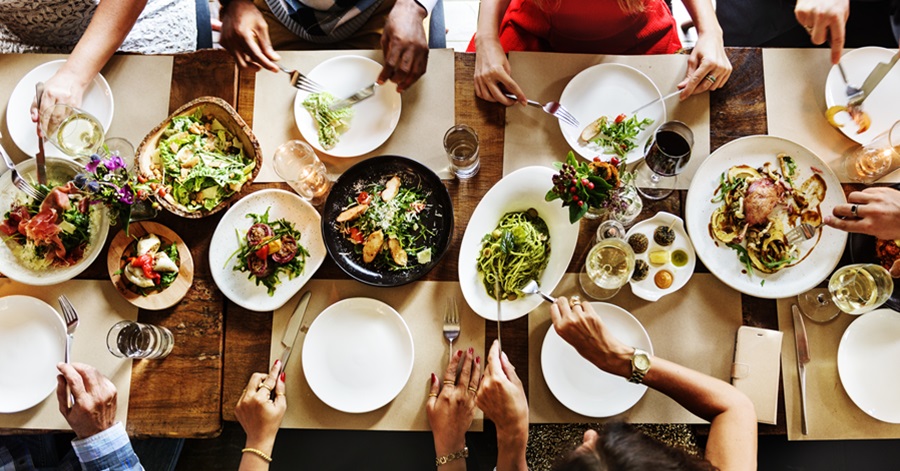
A restaurant booking system allows venues to accept online and in-person diner reservations and arrange table plans based on information such as the number of guests, booking date and time, as well as unique customer preferences and dining history at your venue.
A booking system can also pass on crucial customer information a restaurant requires such as dietary restrictions or whether children are included.
A good booking system does more than take reservations. It keeps service running smoothly, makes life easier for your team, and helps you get to know your guests.
Bookings are made in-person or online at most restaurants, cafes, and diners. Some booking systems also offer features like group deposits, pre-orders, phone bookings, and events management. Walk-ins may be a natural source of customers and revenue, but a restaurant reservation system can maximise these aspects and secure more guests.
Any type or size of hospitality business can benefit from a booking system. ResDiary offers the right kind of software to get your venue packed tight with guests and events. So read on to learn more about restaurant booking systems and what your business can gain from using one.
For those running a restaurant business, a booking system is necessary in these modern times. Services are now expected to be both online and express in delivery. The previous years of relying on pen and paper meant more time and effort spent on managing restaurant bookings. This has prevented staff from fulfilling their existing roles in serving current customers.
Nowadays, a restaurant reservation system streamlines the management of reservations. Customers are no longer restricted to reserving a table during restaurant operating hours. Nor are they left waiting until a staff member is free to pick up a phone. The accessibility of reservation software means that customers can make a booking whenever it suits them. This secures more guests and offers them more comprehensive support. After all, people are more likely to dine at a venue when they have the security of reserved tables. The ease of booking at their leisure is also appealing.
Your team shouldn't have to choose between the door and the phone. When everyone's busy with guests in front of them, a ringing phone or a walk-in gets missed, and the booking goes to the venue down the road. A booking system takes that pressure off. Guests can book at any hour, including when you're closed, and your team gets to focus on the people already in the room.
Booking systems also come with features that offer the restaurants themselves several benefits. Namely that:
Thus, the purpose of a restaurant booking system is multi-faceted for both customers and businesses alike. Making it beneficial to use over traditional pen and paper in today's technological age.
Any restaurant, diner, bar, or cafe can benefit from a reservation system. Hotels and inns with a restaurant can benefit too, especially when rooms and tables are managed in separate systems. Particularly one that provides a range of features that support the users. To remain relevant and accessible to the modern hospitality market, venues need a restaurant booking system. This will ensure no reservation opportunities are missed and no mistakes are made.
Finding the right reservation system may take some time, but the benefits are worthy in the long term.
Start with the problem you need to solve
Before you compare systems, get clear on what isn't working. Venues tend to switch for a few common reasons:
Bookings still live on paper, or on a phone line that rings during service
Guests can't book online, or can't find you on Google and social media
Front-of-house staff are juggling bookings and guests at the same time
The current system charges high commission on bookings, or lacks the features you need
Your reasons decide which features matter most. A venue with one dining room has different needs from a group running several venues, so check how any system handles multiple venues before you commit.
When restaurant reservations are efficiently managed, the other facets of a venue also show improvement in efficiency. This is because a reservation system provides an overview of a day's number of expected guests. In turn, this allows for the appropriate allocation of tables, staff numbers, and resources.
Without a booking system, there is a higher chance of overstaffing or understaffing. There is also a chance of bookings clashing, leading to a lack of available tables. Customers will be secure in their bookings when there is software to schedule each day accordingly. Leading to a maximisation of how many can be seated each night, ensuring no one is left without.
Filling every seat isn't the same as a good service. Too many bookings in one session means long waits for mains and a stretched team, and a guest who waited 40 minutes for a starter may not rebook. Set your rules for covers and turnover so the system fills the room at a pace your kitchen and team can keep up with.
Customers are more likely to make bookings when freed from business operating hours. Restaurant reservation systems are open 24/7, thus customers can make an online reservation at their own convenience. When restaurants are marketed with this convenience, customers are more likely to return for further visits. In turn, this increases the amount of future revenue for businesses.
The timing of demand matters too. Our 2023 analysis found that 48% of evening diners book at least a week in advance. Those bookings often come in when nobody's free to pick up the phone. A booking system takes them automatically, so you're not left hoping they call back.
Furthermore, booking systems are not restricted to in-person or website-based operations. Various booking options are available with an integrated system, such as Google and social media platforms. With the option of booking through various channels, control and revenue are likely to increase. More guests are also likely to visit and return as regulars.
Your booking system can also support your marketing. It syncs with Reserve with Google, Facebook, and Instagram, so diners can book when they're already thinking about where to eat. Promotions let you create special offers and share them online. Listing your venue on a discovery site such as DesignMyNight puts it in front of diners who are looking for somewhere new. DesignMyNight reaches up to 3.9 million users a month, and diners can book straight from your listing.
Look closely at fees, too. Some booking platforms take a commission on every reservation, and that cost adds up quickly on a busy Saturday. Ask for a clear breakdown of what you'll pay per booking, not just the monthly fee. We've covered the detail in our guide to the hidden costs of table booking commission fees.
It is not uncommon for those who have made reservations to not show up the night of their expected dining experience. This is known as a 'no-show' and can make many restaurants lose out on revenue as walk-ins may be turned away in expectation of a table being filled.
No-shows are expensive. Our recent study found that between January and February 2023 alone, no-shows cost the average restaurant £1,325.
The problem is bigger than one venue. Zonal's research puts the cost of no-shows to UK hospitality at £17.6 billion a year in lost sales. Our 2024 Hospitality Industry Report found that 76% of venues were affected by no-shows in 2023, with an average of 8% of bookings going unfulfilled.
However, a solution is available with the implementation of a reservation system. Many systems allow restaurants to automatically send reminders to customers. These reminders can also be sent through multiple avenues such as email or mobile text. This prevents customers from forgetting their booking or missing a notification.
These reminders can also be sent with a chance to cancel the booking. This offers the chance to free up the table and allow walk-ins or another reservation to fill the gap. Deposits and no-show fees can also help. They give guests a reason to turn up, but only if the policy is clear before they book. Tell guests what the deposit is, when it applies, and what happens if they cancel.
Make cancelling easy, too. A guest who can cancel in a couple of taps is more likely to do it in good time, and an early cancellation gives you the chance to resell the table. With ResDiary, reminders can include a link to your cancellation policy and a link to amend or cancel the booking, so guests know the terms before they decide.
Deposits don't need to apply to every booking. Our data shows that most venues running a deposit scheme (78%) only ask for one on bookings of a certain size, usually eight covers or more. ResDiary lets you set simple rules for when a deposit is needed, whether the booking comes in online, over the phone, or in person.
Guests can save their card details securely, and payments can be taken automatically if they don't arrive. Card payments run through Stripe, our PCI-compliant payment partner. Repeat guests don't have to re-enter their details each time, so booking stays quick for the people you most want to see again.
You don't have to take money upfront to run a deposit scheme. Saving a guest's card at the point of booking means a deposit is only taken if they don't turn up, and the policy you've set decides when that applies.
It is common for reservation systems to offer analytical and reporting features alongside their booking capabilities. This data provides valuable insights into key areas of business like:
These insights can then be used to determine business-related decisions. Marketing strategies and menu adjustments are just two of the many decisions supported by the insights.
Every booking also builds a guest record. Dining habits, preferences and past visits are saved each time someone books, so your front-of-house team can see who's coming and what they like before the door opens. If you use an EPoS system, ResDiary can connect to it, so spending and deposit data can be shared between the two. You get a fuller picture of each guest, from booking to bill.
Communication with a customer can be difficult to facilitate when they are not on-premises. Particularly when an establishment is still using the pen and paper reservation format. Fortunately, booking systems open up these channels. Customers can thus be kept updated about real-time changes through email and/or mobile messages.
This line of communication can also be tailored to collect feedback from customers. In turn, this feedback can be used for the improvement of products and services.
Most venues already run other systems, such as an EPoS for orders and payments, rota and payroll software, and marketing tools. A booking system that connects to them cuts down on re-keying and gives you a fuller picture of each guest, from the booking to the bill. See which connections are available in our integrations overview.
Whether you are evolving from traditional pen and paper, or moving to a new system, setting up your reservation system can seem daunting without support. Fortunately, most systems follow similar structures in operations. This makes the change to a new platform efficient in both setup and adjustment. We will outline below what to expect from most systems and how each feature works to streamline the process for any restaurant owner.
Alternatively, you can take our restaurant management quiz. It matches your needs with the right reservation software solution.
For the customer, most restaurant reservation systems follow a similar process to secure a table:
A venue is chosen from a restaurant's website, social media platform, or through Google. Once a location has been decided on, the booking portal will begin walking the customer through each step.
Your widget can be styled to match your brand, so the booking step feels like part of your website rather than a third-party form.
The booking widget on a customer's chosen platform will guide them in selecting a date to dine. After which, they are also prompted with a list of available times on that date. When the amount of guests has been included, real-life tables are then blocked out for a select period.
The customer's name and contact details are needed to secure the booking. However, additional details about dietary requirements or the presence of young children can also be added.
This information is useful for a restaurant to have as it improves its ability to cater to customers' needs. With such catering, restaurants ensure everyone is having an enjoyable experience.
A booking is confirmed via email and/or mobile messaging once a reservation request has been submitted. This confirmation may also come with the option to cancel at any point, or reminders leading up to the date.
Many integrated reservation software includes a visualisation feature. This resource shows the available space in a restaurant. It is often a drag-and-drop tool that allows you to replicate your table settings on a device. Through this tool, bookings can be organised and sufficient space is guaranteed at all times, regardless of the size of events.
Set your table plan once and let the rules do the work. You decide how many covers you can seat at once (your yield) and when bookings can be made, and ResDiary shows guests only the slots that fit. Bookings are assigned to tables automatically, and tables can be linked for larger parties. That matters most on peak nights like Mother's Day, Valentine's Day, and the Christmas party season, when overbooking is a real risk.
All bookings can be directly managed through integrated reservation software. This keeps the entire restaurant staff informed on daily operation schedules. Necessary customer information can also be identified through this line of communication. This may be in the form of dietary restrictions or special requests.
Deliver extraordinary service through the support features of your reservation software. Offer pre-orders, upsell opportunities, and promotions at the start of their booking journey.
Hotels with rooms and restaurants
IIf your hotel has rooms and a restaurant, you'll know the hassle of switching between a property management system (PMS) and a separate table booking system. Connect the two and room and table bookings sit side by side, so reception and restaurant staff work from the same information.
With a connected system:
Reception can book a table from inside the PMS, without logging in to ResDiary.
Table availability follows the same rules as your online bookings, so only free tables show.
Guests can add a table when they book their room. What's available depends on the PMS you use.
Hotel operators get an overview of guest status across both systems.
Some connections run both ways. Guestline, Hop and Rezcontrol all support two-way links, so a booking created, changed or cancelled in one system is updated in the other.
ResDiary works with PMS partners including Elina, Guestline, Hop, ResortSuite and Rezcontrol. How deep each connection goes varies, so see our full list of integrations and check which features your PMS supports.
To find out more, read our guide to booking systems that integrate with a PMS or see ResDiary for hotels.
A restaurant reservation system is the future of the hospitality industry. This software supports customers and staff alike from the initial booking to the end of the dining experience. This software is the next step beyond pen and paper operations. So, get your best foot forward by choosing the ResDiary Restaurant Booking System.
Our reservation system allows you to manage your venue reservations in one place, at any time and at any location. Setup is straightforward, and our training features mean every member of staff can use ResDiary from day one. The addition of our extensive training features also ensures all staff members are capable of using ResDiary.
With the addition of resources such as event management and marketing solutions, ResDiary supports any hospitality venue, regardless of size or cuisine.
Book a demo today to see how a booking system fits your venue.

Does ResDiary work with my property management system?
ResDiary works with PMS partners including Elina, Guestline, Hop, ResortSuite and Rezcontrol. How deep each connection goes varies by partner, so check which features your PMS supports before you commit.
Can a table booking clash with a booking made in the PMS?
Availability is shared. When reception searches for a table in the PMS, ResDiary applies the same rules as your online bookings, so only free slots appear. Keep your table plan and cover settings up to date so those rules match how your restaurant runs.
Disclaimer: This guide is general in nature and does not take into account your individual circumstances. Before acting on any information, you should consider whether this is right for your business.