Tips & Tricks
•
15 Jun, 2026
.jpg)
The rapid progression of technology means that concepts once in the realm of science fiction are gradually becoming reality. One example is robot waiters. Seeing robots deliver food might seem like something out of cheesy movies from the 1980s, but they are now a functioning reality in the hospitality industry.
So what is the current status of robot waiters in restaurants? How do they work, could you implement one in your venue, and how much would it cost you to do so?
Read on for all the information restaurant owners and managers need on robot waiters.
Robot waiters are exactly what they sound like. They are automated machines that are designed to replicate the role of waiters as much as possible.
At present, the functionality of robot waiters is generally limited to delivering food and removing dirty dishes. However, companies are working hard to expand robots' capabilities to eliminate the need for human front-of-house staff effectively.
Naturally, robot waiters are an attractive prospect for hospitality business owners. Robot waiters can work full days without the need to take a break. One popular machine, Bellabot, can be rented for as little as USD$1,215 a month (just over $40 a day in a 30-day month), making it a much cheaper alternative to paying a human worker even minimum wage.
Robot waiters are often capable of greeting customers, with some having a screen simulating a face. Robot waiters typically have trays built into their bodies. Often, a staff member loads food onto the waiter, and customers take their food themselves.
These machines use self-driving technology to navigate restaurants, similar to the functionality utilised by robotic vacuum cleaners. Some include LIDAR or AI-powered self-driving for more advanced obstacle avoidance.
The vast majority of robot waiters do not have the capacity to take orders. Many restaurants can get around this with the increasing popularity of ordering via QR codes and online menus. Since most robot waiters operate on wheels, stairs and outdoor areas can still represent major challenges.
The technology at work in robot waiters is not quite as groundbreaking as some might think. This means that for many restaurant owners, human front of staff workers will still be a necessity for some time.
However, it also raises interesting questions as to how disruptive these machines could prove to be with further investment. While robot waiters are currently an interesting novelty, how earth-shattering could they be with more humanoid designs and the ability for AI-powered interactions with guests?
Here are some of the most popular robot waiters on the market today. Keep in mind that the availability of different robot waiters can vary greatly depending on your location.
The most widely deployed restaurant robot globally. BellaBot uses dual SLAM navigation (laser + visual) and carries up to 40 kg across 4 trays. Its cat-face screen and touch-responsive expressions make it one of the more guest-friendly options on the floor. Battery life runs 12–24 hours depending on usage, with a swappable battery option for continuous operation.
Buy: from $15,900 (includes robot, charger, battery, 1-year warranty)
Lease: from $1,215/month (includes shipping, installation, training, and support)
Best for: mid-to-high volume restaurants wanting guest interaction alongside delivery
A compact, forward-leaning design that fits through gaps as narrow as 55 cm — useful for tighter dining rooms. KettyBot combines food delivery with a built-in promotional display screen, making it a dual-purpose tool for service and in-venue marketing. It carries up to 30 kg and runs on dual SLAM navigation.
Pricing: contact Pudu Robotics or an authorised distributor
Best for: smaller venues or those wanting to run promotions alongside service
A high-capacity workhorse designed for volume. PuduBot 2 uses VSLAM+ technology, carries 10 kg per delivery, and offers 10–24 hours of battery life. It's built for multi-industry use — restaurants, hotels, and healthcare — and handles contact-free delivery well.
Pricing: contact Pudu Robotics or an authorised distributor
Best for: high-volume venues or multi-floor operations (elevator integration available)
Two models with the same core tech: LIDAR navigation, weight sensors that trigger automatic return when trays are empty, and a clean, unobtrusive design. Servi has 2 trays and a bussing tub; Servi Mini has 1 tray. Both run 8–12 hours on a 4-hour charge.
Lease: from $750/month
Best for: operators who want a no-fuss, reliable delivery robot without the interactive features
Three adjustable trays and 12–15 hours of battery life (3.5-hour charge). A solid mid-range option for venues that need all-day coverage without swapping batteries.
Pricing: contact Richtech Robotics
Best for: venues needing long battery life and flexible tray configuration
| Model | Maker | Trays / Capacity | Battery life | Navigation | Starting cost | Best for |
|---|---|---|---|---|---|---|
| BellaBot | Pudu Robotics | 4 trays / 40 kg | 12–24 hrs | Dual SLAM | From $15,900 buy / $1,215/mo lease | Guest interaction + delivery |
| BellaBot Pro | Pudu Robotics | 4 trays / 40 kg | 11 hrs | VSLAM+ | Contact supplier | Premium interactive service |
| KettyBot | Pudu Robotics | 2 trays + box / 30 kg | ~9 hrs | Dual SLAM | Contact supplier | Tight spaces + in-venue marketing |
| PuduBot 2 | Pudu Robotics | 1 tray / 10 kg | 10–24 hrs | VSLAM+ | Contact supplier | High-volume / multi-floor |
| Servi | Bear Robotics | 2 trays + bussing tub | 8–12 hrs | LIDAR | From $750/mo lease | Simple, reliable delivery |
| Servi Mini | Bear Robotics | 1 tray | 8–12 hrs | LIDAR | Contact supplier | Smaller venues |
| Matradee L | Richtech Robotics | 3 adjustable trays | 12–15 hrs | — | Contact supplier | Long shifts, flexible trays |
The cost of renting or leasing a robot waiter generally comes in at around USD$750-$1,500 a month. Purchasing a robot waiter outright generally costs around USD$10,000-$20,000, though some very simple models are available for less.
Now that you have a firm understanding of the role robot waiters are playing in the hospitality industry, you probably cannot help but wonder what it would be like to utilise them in your venue. Before jumping into a decision, we have assembled some pros and cons to consider.
Machines like BellaBot can be rented for as little as USD$1,215 a month, and are able to work endlessly for as long as their battery life allows. Robot waiters take care of jobs that may allow you to cut down on your workers and thus your labour costs.
Every restaurant owner and manager knows just how punishing labour costs can be. Automating aspects of your front-of-house work can therefore play a huge role in increasing restaurant profit margins.
In the wake of the COVID-19 pandemic, labour shortages have been harshly felt across the hospitality industry. While the restaurant industry is now recovering in this area, it has served as a stark reminder of how unanticipated circumstances can impact businesses.
Robot waiters can therefore serve as excellent insurance against future events such as COVID lockdowns. Hospitality is a famously turbulent industry, and having access to mechanical employees who can work 24/7 can create greater peace of mind.
Robot waiters are still a rare sight for many customers. Utilising them in your restaurant can be a great source of novelty and interest for customers and the media.
Simply type "robot waiters" into a search engine, and you will likely be bombarded with press coverage of local restaurants that have implemented them.
Even with the current, rudimentary nature of robot waiters, utilising them in your venue can be a great way to get eyeballs on your business and customers in your seats.
Some manufacturers of robot waiters argue that their products are not designed to replace human employees at all. Instead, they take care of more menial tasks allowing workers to focus on human-to-human interactions with customers.
In fact, robot waiters can even serve to benefit your human employees in this area. Business Insider reported that one Florida restaurant chain even claimed that staff received even bigger tips once they began using a robot waiter.
Restaurant chain owner Carlos Gazitua attributed this to human staff having more time to speak to and connect with customers while the robot waiter took care of less significant jobs.
While robot waiters may someday totally change the face of the hospitality industry, it appears that time is not around the corner. At present, robot waiters are still in their infancy and you may find their functionality more modest than you expect.
The majority of robot waiters still require customers or staff members to load and unload their contents. The fact that robot waiters still rely on wheels to move around makes venues with stairs and outdoor areas challenging to navigate. The implementation of robot waiters has the potential to disappoint business owners and customers alike.
The Oxford Dictionary defines hospitality as "the friendly and generous reception and entertainment of guests, visitors, or strangers." While steps have been taken to make some robot waiters less cold and impersonal, it is virtually impossible for a robot to create the same warm and inviting sense of hospitality as your staff.
It is worth remembering that your current employees, unions and the general public may not be thrilled about the automation of hospitality work. Needless to say, employee morale may suffer as they gradually watch their colleagues be laid off as robots are brought in to take their place.
Pew Research has found that around 82% of Americans anticipate widespread job automation in the coming decades, with most expecting outcomes to be more negative than positive. Therefore, the adoption of extensive automation in your restaurant may present challenges for consumer sentiment towards your business.
Whether or not robot waiters are in your venue's near future, there is always room for the further uptake of technology in your restaurant.
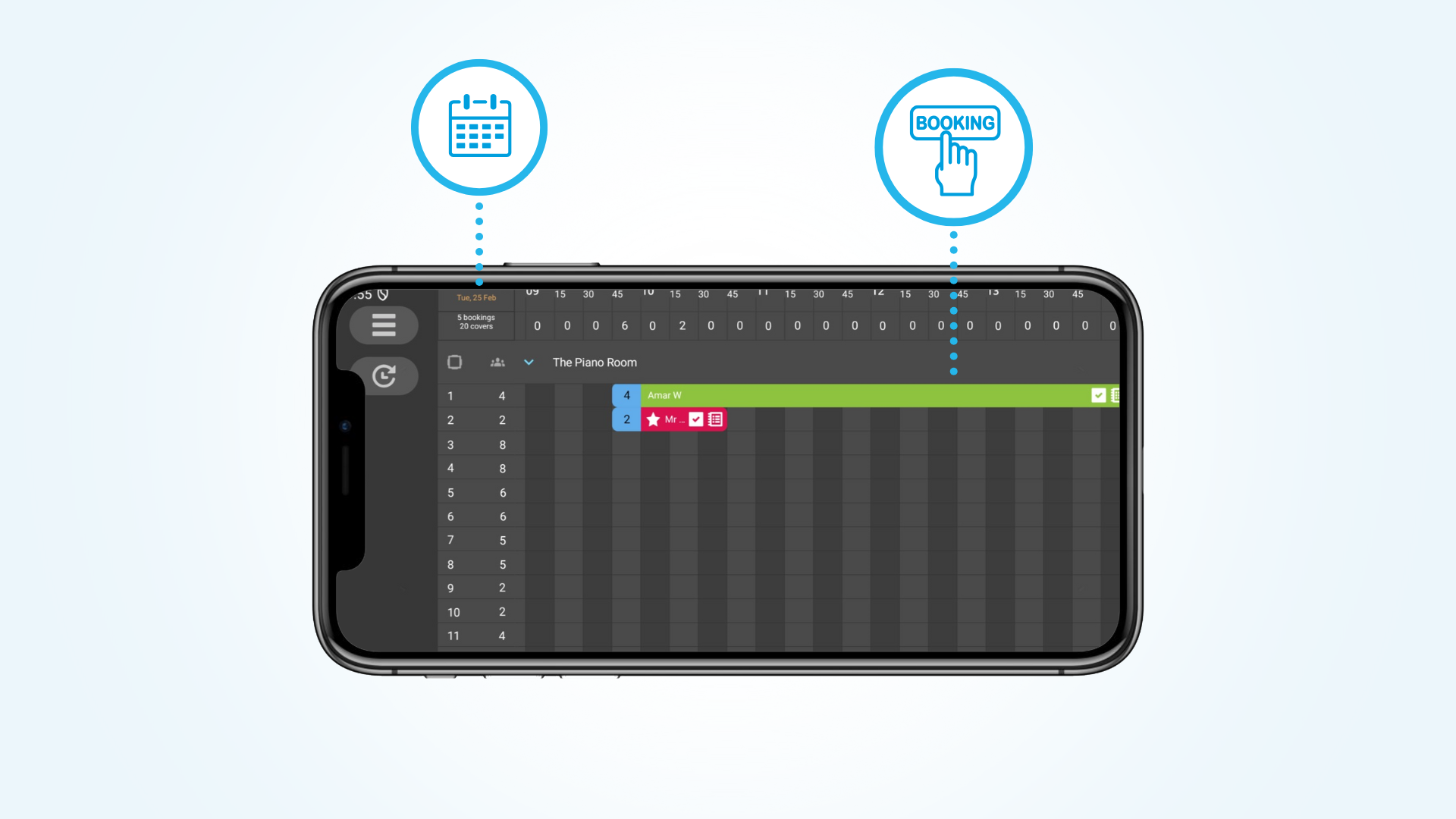
ResDiary serves as an excellent hub for implementing technology in your business. Its digital table management system makes reservation maintenance a breeze, especially with the help of ResPhone, an automated phone reservation service.
Discover how operators are using AI to save time, cut costs, and elevate guest experience - without losing the human touch.